O Holy Night Piano Sheet Music PDF Free: A Comprehensive Guide
Discover readily available, free piano sheet music for “O Holy Night” in PDF format! This guide explores popular websites, difficulty levels, and essential music symbols, helping you find and play this classic carol effortlessly.
“O Holy Night”, originally titled “Cantique de Noël” (Christmas Hymn), stands as a beloved and enduring Christmas carol celebrated globally. Its powerful melody and profoundly moving lyrics evoke a sense of awe and reverence, making it a staple during the holiday season. The song’s appeal transcends cultural boundaries, resonating with audiences of all backgrounds.
For piano enthusiasts, “O Holy Night” presents a beautiful, yet sometimes challenging, piece to learn and perform. Fortunately, a wealth of resources exists online, offering free piano sheet music in PDF format. These resources cater to various skill levels, from beginner arrangements to complex, advanced interpretations. This accessibility allows pianists of all abilities to experience the joy of playing this iconic carol. Finding the right sheet music is the first step towards bringing this timeless classic to life on the piano;
The History of the Song
“O Holy Night” boasts a fascinating history, originating in France in 1847. Placide Cappeau, a French poet, penned the original French lyrics, inspired by a poem he read about the birth of Jesus. Initially, it wasn’t intended for religious services, but rather as a Christmas poem for a wealthy patron. Shortly after, Adolphe Adam composed the music, creating the memorable melody we know today.
However, the song faced initial resistance from the Catholic Church due to Cappeau’s perceived association with liberal political views. Despite this, “O Holy Night” gained popularity, eventually reaching the United States in the mid-19th century. John Sullivan Dwight, an American Unitarian minister, created the English translation, solidifying its place in American Christmas traditions. Today, countless versions and arrangements exist, including numerous free piano sheet music PDFs readily available online for musicians of all levels.
Adolphe Adam: Composer of O Holy Night
Adolphe Charles Adam (1803-1856) was a French composer, renowned for his lyrical operas and ballets. While perhaps best known today for “Cantique de Noël” – the original French title of “O Holy Night” – Adam enjoyed considerable success during his lifetime. He composed over forty operas, including “Le Toréador” and “Giselle,” the latter’s ballet music being particularly celebrated.
Adam’s compositional style was characterized by its melodic grace and harmonic richness. He skillfully blended French operatic traditions with emerging Romantic influences. Commissioned to set Placide Cappeau’s poem to music, Adam crafted a soaring melody that perfectly captured the poem’s reverence and joy. The resulting carol quickly became a beloved Christmas staple, and continues to inspire musicians today, with numerous free piano sheet music PDFs available for study and performance. His legacy lives on through this enduring masterpiece.
Placide Cappeau: The Lyricist
Placide Cappeau (1808-1877) was a French poet and wine merchant who penned the original French lyrics for “Cantique de Noël,” later known as “O Holy Night.” In 1843, Cappeau was approached by his friend, Adolphe Adam, to write a Christmas hymn for a local church. Inspired by a winter scene and a desire to express the profound joy of the Nativity, Cappeau crafted a poem filled with vivid imagery and heartfelt devotion.
Initially, the poem faced some resistance from church authorities due to Cappeau’s perceived unconventional lifestyle. However, the beauty and emotional power of the lyrics, combined with Adam’s captivating melody, quickly won over audiences. The carol’s message of hope and redemption resonated deeply, leading to its widespread popularity. Today, Cappeau’s words continue to inspire, readily accessible through countless free piano sheet music PDF resources available online for musicians of all levels.
John Sullivan Dwight: English Translation
John Sullivan Dwight (1813-1893), an American Transcendentalist and music critic, is credited with creating the English translation of “Cantique de Noël,” bringing “O Holy Night” to English-speaking audiences. Dwight, a Harvard graduate and Unitarian minister, possessed a deep appreciation for music and poetry. He recognized the carol’s inherent beauty and sought to convey its spiritual depth in English.
His translation, completed in 1855, skillfully captured the essence of Cappeau’s original lyrics, preserving the carol’s powerful imagery and emotional resonance. Dwight’s work was crucial in establishing “O Holy Night” as a beloved Christmas standard in the United States and beyond. Today, countless versions of the song, based on his translation, are available as free piano sheet music PDFs, allowing musicians to experience and share this timeless carol.
Finding Free O Holy Night Piano Sheet Music
Explore numerous online resources offering free “O Holy Night” piano sheet music in PDF format, catering to various skill levels and musical preferences!
Popular Websites Offering Free PDFs
Numerous websites specialize in providing free sheet music, and “O Holy Night” is frequently available. Notenhac.com stands out, offering piano sheet music with accompanying MIDI files and even video tutorials to aid learning. Free-scores.com presents a diverse selection, though quality can vary; careful review is advised.
Musescore.com operates as a community-driven platform, meaning users upload and share arrangements. This results in a vast library, but accuracy isn’t always guaranteed, so checking the score is crucial. Many sites allow downloads in PDF format, ensuring compatibility across devices. You can often find arrangements for different piano levels, from beginner to advanced. Remember to respect copyright notices and terms of use when downloading and utilizing these free resources. Exploring these platforms provides a wealth of options for accessing “O Holy Night” sheet music without cost.
Notenhac.com: A Detailed Look
Notenhac.com is a particularly valuable resource for obtaining “O Holy Night” piano sheet music in PDF format. The site distinguishes itself by offering not only the sheet music itself but also supplementary learning materials. Users can download the free PDF alongside a corresponding MIDI file, enabling them to hear how the piece should sound.
Furthermore, Notenhac.com provides video tutorials, offering a visual guide to playing the arrangement. This is especially beneficial for learners of all levels. The arrangements available cater to intermediate and advanced pianists, providing a good challenge for those with some experience. The website’s interface is user-friendly, making navigation and downloading straightforward. It’s a reliable source for accurate transcriptions and helpful resources, enhancing the learning experience for anyone wanting to play this beloved carol.
Free-scores.com: Options and Quality
Free-scores.com presents a diverse collection of “O Holy Night” piano sheet music, offering multiple arrangements to suit different preferences. The site boasts a substantial library, meaning users can often find several versions of the song, varying in complexity and style. However, the quality can fluctuate, as the platform hosts contributions from various users.
It’s advisable to preview the sheet music before downloading to assess its accuracy and legibility. While many arrangements are well-transcribed, some may contain errors or be poorly formatted. The site offers both simple and more elaborate arrangements, catering to beginner to intermediate players. Users should carefully review the arrangement details and user ratings, if available, to ensure they are downloading a reliable and playable version of this cherished Christmas carol.
Musescore.com: Community-Based Sheet Music
Musescore.com functions as a vibrant, community-driven platform for sharing sheet music, including numerous arrangements of “O Holy Night” available as free PDFs. This site distinguishes itself by allowing users to upload, download, and even edit scores, fostering a collaborative musical environment. Consequently, the selection is vast and continually expanding, offering a wide range of skill levels – from beginner-friendly simplified versions to complex, advanced arrangements.
However, due to its open nature, quality control varies significantly. It’s crucial to carefully evaluate each score before downloading, checking for accuracy, completeness, and proper formatting. User comments and ratings can provide valuable insights into the reliability of a particular arrangement. Musescore also offers interactive playback features, allowing you to preview the music before committing to a download, a helpful tool for assessing suitability.
Sheet Music Difficulty Levels
Explore “O Holy Night” piano arrangements tailored to your skill! Options range from easy beginner pieces to intermediate and advanced versions, ensuring a rewarding musical experience for everyone.
Easy Piano Arrangements
For beginners, simplified “O Holy Night” piano arrangements offer a gentle introduction to this beloved carol. These versions typically feature a reduced chord vocabulary, simpler rhythms, and a focus on the melody in the right hand, with basic accompaniment in the left. Expect fewer octave leaps and complex harmonies, making it accessible for those with limited piano experience.
Many free PDF sheet music sources, like Notenhac.com, provide easy arrangements specifically designed for novice players. These arrangements often omit intricate embellishments and prioritize playability. Look for versions labeled “easy” or “beginner” to ensure a suitable challenge. These simplified scores allow you to quickly learn and enjoy playing “O Holy Night” without feeling overwhelmed, building confidence and foundational piano skills. Focus on accurate rhythm and clear melody playing to create a beautiful rendition.
Intermediate Piano Arrangements
Intermediate “O Holy Night” piano sheet music builds upon basic skills, introducing more complex chords, rhythms, and harmonies; These arrangements typically involve fuller left-hand accompaniment patterns, incorporating broken chords or arpeggios to enhance the texture. Expect to encounter octave passages and slightly more challenging fingerings, demanding greater dexterity and coordination.
Websites like Musescore.com and Free-scores.com host a variety of intermediate arrangements, often created by community members. These scores may include more elaborate introductions and interludes, adding depth to the performance. Players comfortable with basic scales and chords will find these arrangements rewarding, allowing for a more expressive and nuanced interpretation of the carol. Look for arrangements that specify an intermediate level to ensure a suitable challenge and enjoyable learning experience.
Advanced Piano Arrangements
Advanced “O Holy Night” piano sheet music presents a significant challenge, demanding a high level of technical proficiency and musical maturity. These arrangements feature intricate ornamentation, complex harmonies, and demanding rhythmic patterns. Expect extensive use of octaves, arpeggios, and challenging chord voicings, requiring exceptional finger dexterity and hand independence.
Advanced scores often include elaborate introductions, extended interludes, and virtuosic runs, showcasing the pianist’s skill. Finding these arrangements typically involves searching platforms like Notenhac.com or exploring curated collections from professional arrangers. Players should possess a strong understanding of music theory and advanced piano techniques to successfully navigate these pieces. These arrangements are ideal for experienced pianists seeking a truly impressive and rewarding performance experience, capturing the full emotional depth of the carol.
Understanding Piano Sheet Music Symbols
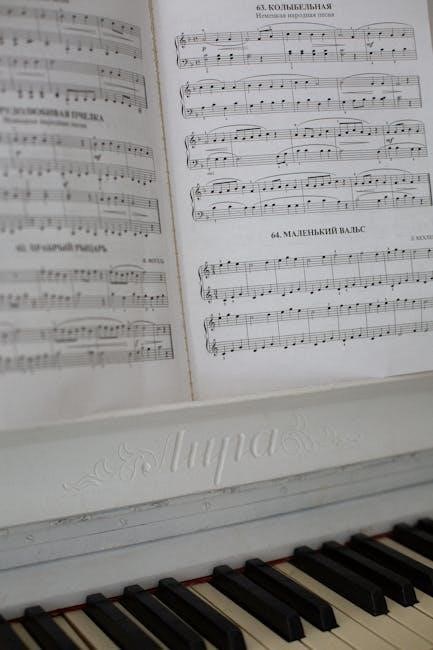
Decoding key signatures, time signatures, pedal markings, and dynamics is crucial for accurate interpretation. Familiarize yourself with accidentals and articulations for expressive playing!
Key Signatures and Time Signatures
Understanding key signatures is fundamental; “O Holy Night” is often found in D-flat major, exhibiting five flats. This indicates which notes are consistently sharped or flattened throughout the piece, influencing the overall tonality and mood. Carefully observe the key signature at the beginning of the sheet music to ensure accurate note reading.
The time signature, typically 4/4 (common time), dictates the rhythmic structure. This means there are four beats in each measure, with the quarter note receiving one beat. Recognizing the time signature helps you maintain a consistent tempo and understand the duration of each note. Pay attention to any changes in time signature within the arrangement, as some versions may incorporate variations for artistic effect. Mastering these elements unlocks a deeper comprehension of the music’s framework, allowing for a more nuanced and expressive performance.
Pedal Markings and Dynamics
Pedal markings, indicated by symbols like “*” or “+”, are crucial for achieving the song’s lush and resonant sound. These markings instruct when to depress and release the sustain pedal, creating a smooth connection between notes and enhancing the harmonic richness. Pay close attention to these indications, as they significantly impact the overall texture.
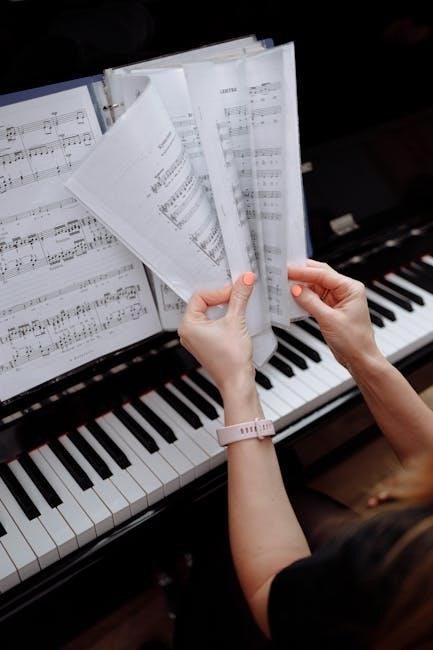
Dynamics, denoted by terms like p (piano – soft), mf (mezzo forte – medium loud), and f (forte – loud), guide your expressive playing. “O Holy Night” features a wide dynamic range, building from quiet, intimate passages to powerful, soaring climaxes. Observe crescendo (<) and diminuendo (>) markings, which indicate gradual increases or decreases in volume. Accurate interpretation of dynamics brings the emotional depth of the song to life, capturing its dramatic intensity.
Accidentals and Articulations
Accidentals – sharps (#), flats (♭), and naturals (♮) – alter the pitch of notes, creating harmonic interest and emotional nuance. In “O Holy Night” sheet music, carefully note these symbols, as they influence the melody and harmony. Understanding their placement is essential for accurate playing and faithful reproduction of the composer’s intent.
Articulations, such as staccato (.), legato (—), and accents (>), shape the phrasing and character of the music. Staccato notes are played short and detached, while legato notes are connected smoothly. Accents emphasize specific notes, adding dramatic weight. Paying attention to these markings allows you to convey the song’s expressive qualities, bringing out its lyrical beauty and powerful emotional impact. Proper articulation enhances musicality.
Downloading and Printing Your Sheet Music
Ensure your device supports PDF viewing for seamless access. Optimize print settings – select ‘fit to page’ and high quality for clear, readable sheet music!
Ensuring PDF Compatibility
Before downloading, verify your device or computer has a reliable PDF reader installed. Adobe Acrobat Reader is a widely used, free option, ensuring accurate display of the sheet music. Different websites may generate PDFs with varying compatibility levels; some older readers might struggle with newer formats.
If you encounter issues, try updating your PDF reader to the latest version. Alternatively, most web browsers (like Chrome, Firefox, and Edge) have built-in PDF viewers. These often provide sufficient functionality for viewing and printing sheet music. Consider downloading the PDF from a different source if one version consistently fails to open correctly. Checking the website’s recommendations or FAQs can also offer specific troubleshooting steps for their PDFs. Proper compatibility guarantees a smooth practice experience!
Print Settings for Optimal Results
To achieve the best printed sheet music, access your PDF reader’s print settings. Select “Actual Size” or “100%” scaling to prevent any distortion of the notes or staff lines. Ensure your printer is set to print in black and white, unless a colored version is specifically desired. Choose a high-quality paper stock – slightly heavier paper prevents bleed-through and provides a better tactile feel.
Experiment with different printer settings to find what works best for your equipment. Consider a “Draft” mode for practice copies to save ink, but use the highest quality setting for performance copies. Preview the print before finalizing to confirm the layout is correct and legible. Proper print settings will make reading and playing your “O Holy Night” sheet music a more enjoyable experience!