Frigidaire Stacked Washer and Dryer Manual: A Comprehensive Guide
Discover essential repair manuals, care guides, and literature for Frigidaire stacked units, offering 365-day returns and fast shipping for DIY fixes.
Understanding Your Frigidaire Stacked Unit
Frigidaire stacked washer and dryer combinations represent a space-saving laundry solution, integrating both appliances into a single, vertically oriented unit. These systems are designed for convenience, particularly in apartments, condos, or homes with limited laundry room space. Understanding the core components – the washer below and the dryer above – is crucial for efficient operation and maintenance.
Key features often include a shared control panel, simplifying cycle selection for both washing and drying. Familiarizing yourself with this panel, alongside the specific functionalities of your model (like the FEX831CS0), is paramount. Accessing repair manuals and diagrams, readily available online, empowers users to perform basic troubleshooting and maintenance. Remember to prioritize electrical safety when consulting service manuals, like those for the Affinity dryer, and always follow recommended procedures.
Model Number Identification
Locating your Frigidaire stacked unit’s model number is the first step towards accessing the correct documentation and support. This unique identifier is essential when searching for replacement parts, repair manuals, or troubleshooting guides. Typically, the model number is found on a label affixed to the appliance.
Check inside the washer door jamb, on the dryer’s back panel, or within the user manual itself. For models like the FEX831CS0, the label will clearly display the full model number. Having this information readily available streamlines the process of finding compatible diagrams and DIY repair resources. Accurate model identification ensures you’re utilizing the correct instructions, preventing potential damage or incorrect repairs. Online appliance lookup systems utilize this number to pinpoint specific manuals and parts.
Locating the Manual Online
Finding your Frigidaire stacked washer and dryer manual online is remarkably straightforward. Numerous websites specialize in appliance documentation, offering free downloads or purchase options. Begin by visiting the official Frigidaire website and utilizing their support or manual search function, inputting your specific model number – like FEX831CS0 – for precise results.
Alternatively, explore dedicated appliance parts and manual websites. These platforms often host extensive libraries of DIY repair guides and diagrams. Search engines are also valuable; a simple query like “Frigidaire FEX831CS0 manual PDF” will yield relevant links. Remember to verify the source’s credibility to ensure you’re accessing accurate and up-to-date information. Many sites offer manuals for immediate download, simplifying the repair process.
Manual Contents Overview
A comprehensive Frigidaire stacked washer and dryer manual typically encompasses several crucial sections. Expect detailed instructions on operating both the washer and dryer, including cycle selections, detergent dispensing, and temperature settings. Troubleshooting guides are essential, addressing common issues and offering potential solutions for both appliances.
Furthermore, the manual will outline vital safety precautions, electrical grounding instructions, and preventative maintenance schedules. Diagrams and wiring schematics are often included, particularly in service manuals, aiding in DIY repairs. You’ll find guidance on cleaning the drums, maintaining the lint filter, and ensuring proper ventilation. Replacement part information and access to professional repair services may also be provided, ensuring a complete resource for your appliance’s lifecycle.

Washer Operation
Explore detailed cycle selections, detergent usage, and water temperature guidance for optimal cleaning performance with your Frigidaire stacked washer unit.
Starting a Wash Cycle
Before initiating a wash cycle on your Frigidaire stacked unit, ensure the washer is properly leveled and connected to both water and electrical supplies. Load laundry, avoiding overloading, and close the door securely. Next, add the appropriate amount of detergent to the dispenser, referencing the detergent manufacturer’s guidelines and your laundry load size.
Select the desired wash cycle using the control panel, considering fabric type and soil level. Adjust water temperature settings as needed – cold, warm, or hot – for optimal cleaning and fabric care. Press the ‘Start’ button to begin the cycle; the machine will automatically fill with water, agitate, drain, and spin.
Monitor the cycle progress and address any error codes promptly, consulting the full manual for troubleshooting assistance. Remember to always follow safety precautions during operation.
Wash Cycle Selection Guide
Your Frigidaire stacked washer offers a variety of cycles tailored to different laundry needs. The ‘Normal’ cycle is ideal for everyday cottons and linens. For delicate fabrics like lingerie or silk, choose the ‘Delicates’ or ‘Hand Wash’ cycle, utilizing a gentle wash action. Heavily soiled items benefit from the ‘Heavy Duty’ cycle, providing extended wash times and robust agitation.
A ‘Quick Wash’ cycle offers a shorter wash time for lightly soiled items, while ‘Permanent Press’ minimizes wrinkles in synthetic fabrics. Utilize the ‘Bulky Items’ cycle for comforters or blankets, ensuring thorough cleaning. Consider the ‘Sanitize’ cycle for enhanced hygiene, employing higher water temperatures.
Always refer to garment care labels and the full manual for optimal cycle selection, maximizing cleaning performance and protecting your clothes.
Detergent Dispenser Instructions
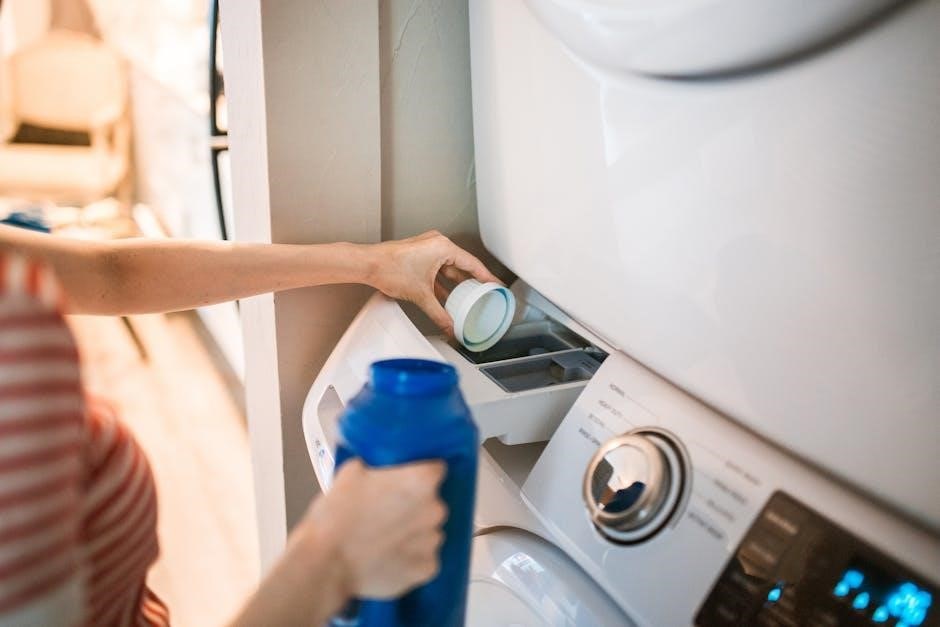
The Frigidaire stacked washer’s detergent dispenser features separate compartments for detergent, fabric softener, and bleach. Locate the dispenser drawer, typically positioned on the top of the machine. For powdered or liquid detergent, fill the designated compartment – avoid overfilling. Ensure the detergent doesn’t clump or solidify within the dispenser.
Fabric softener should be added to its specific compartment, diluted according to the softener’s instructions. Bleach, if used, goes into the bleach compartment, never directly onto clothes.
Regularly clean the dispenser drawer to prevent residue buildup, ensuring optimal performance. Refer to the manual for specific cleaning instructions and recommended detergent types for your model.
Water Temperature Settings
Your Frigidaire stacked washer offers a range of water temperature settings to accommodate various fabric types and cleaning needs. Common options include Cold, Warm, and Hot. Cold water is ideal for delicate fabrics and preventing color fading, while warm water suits everyday laundry.
Hot water is best for heavily soiled items and sanitizing, but can cause shrinkage or color bleeding. Always check garment care labels before selecting a temperature.

Some models may feature specialized cycles with pre-programmed temperature settings. Adjusting the water temperature impacts cleaning effectiveness and energy consumption. Refer to your washer’s manual for detailed guidance on optimal temperature selection for different loads;
Troubleshooting Common Washer Issues
Encountering problems with your Frigidaire stacked washer? Common issues include failure to start, insufficient water, draining problems, or excessive vibration. First, ensure the power cord is securely plugged in and the water supply valves are fully open.
For draining issues, check the drain hose for kinks or clogs. Excessive vibration may indicate an unbalanced load – redistribute items evenly. If the washer doesn’t start, verify the door is properly latched.
DIY repair guides and videos can assist with simple fixes. However, for complex issues or electrical concerns, consult a qualified appliance repair technician to avoid further damage or safety hazards.
Dryer Operation
Explore detailed cycle settings, lint filter maintenance, and ventilation requirements for optimal performance of your Frigidaire stacked dryer, ensuring efficient drying.
Starting a Dry Cycle
Initiating a drying cycle on your Frigidaire stacked unit is straightforward, yet understanding the initial steps ensures optimal results and prevents potential issues. First, confirm the washer cycle is fully completed and the drum is empty. Next, load the dryer drum, ensuring items are evenly distributed to promote balanced tumbling.
Carefully close the dryer door, and then select your desired dry cycle using the control panel. Options typically include automatic dryness levels (like ‘More Dry’, ‘Normal’, or ‘Less Dry’) and timed dry settings. Adjust any additional preferences, such as temperature settings (High, Medium, Low, or Air Dry).
Finally, press the ‘Start’ button to begin the cycle. The dryer will automatically begin heating and tumbling. Remember to regularly check the lint filter before each cycle for safety and efficiency. Following these steps will help you achieve perfectly dried laundry every time.
Dry Cycle Settings Explained
Frigidaire stacked dryers offer a variety of cycle settings designed for different fabric types and drying needs. ‘Automatic Dry’ utilizes moisture sensors to stop the cycle when clothes are dry, preventing over-drying and saving energy. ‘Timed Dry’ allows you to set a specific drying duration, ideal for delicate items or small loads.
Temperature settings are crucial; ‘High’ is for durable fabrics like towels, ‘Medium’ suits everyday items, ‘Low’ is best for delicates, and ‘Air Dry’ provides no heat for refreshing or fluffing. Specialized cycles like ‘Bulky/Sheets’ provide extended drying times for larger items, while ‘Delicates’ uses gentle heat.
Understanding these settings ensures optimal garment care and prevents damage. Always refer to the garment’s care label for specific drying instructions. Utilizing the correct cycle maximizes efficiency and prolongs the life of your clothes and your appliance.
Lint Filter Maintenance
Regular lint filter cleaning is paramount for optimal dryer performance and safety. A clogged filter restricts airflow, increasing drying time, energy consumption, and posing a fire hazard. Frigidaire recommends cleaning the lint filter after every load. Simply locate the filter, typically inside the dryer door or on top of the drum, and remove any accumulated lint.
Periodically, a deeper cleaning is necessary. Use a vacuum cleaner with a brush attachment to remove lint that may have bypassed the filter and accumulated within the filter housing. Inspect the filter for damage and replace it if torn or broken.
Maintaining a clean lint pathway not only improves efficiency but also safeguards against potential fire risks. Ignoring this simple maintenance task can lead to costly repairs and dangerous situations. Prioritize lint filter care for a safe and effective drying experience.
Ventilation Requirements
Proper ventilation is crucial for safe and efficient dryer operation. Frigidaire stacked units must be vented to the outside to expel moisture and prevent the buildup of dangerous gases. The vent should be rigid metal or flexible metal ducting, with a smooth interior and minimal bends.
Avoid using plastic or vinyl venting, as these materials are fire hazards. The vent duct should be the shortest, straightest path possible, ideally no longer than 25 feet, with each 90-degree bend reducing the maximum length by 5 feet. Ensure the exterior vent flap operates freely.
Regularly inspect the vent duct for obstructions, such as lint accumulation or bird nests. A restricted vent significantly increases drying time and poses a fire risk. Adhering to these ventilation guidelines ensures optimal performance and safety.
Troubleshooting Common Dryer Issues
Encountering problems with your Frigidaire dryer? Common issues include the dryer not starting, not heating, or taking too long to dry clothes. First, verify the power cord is securely plugged in and the circuit breaker hasn’t tripped. If it doesn’t heat, check the heating element and thermal fuse – these often require replacement.
Long drying times frequently indicate a clogged lint filter or restricted vent. Always clean the lint filter after each load and regularly inspect the vent duct for obstructions. Unusual noises could signal a worn drum bearing or a foreign object lodged inside.
Refer to your manual for specific error codes and diagnostic steps. DIY repair videos can also be helpful, but for complex issues, consult a qualified appliance technician.

Maintenance and Care
Regular cleaning of both drums, exterior surfaces, and a preventative maintenance schedule will ensure optimal performance and longevity for your Frigidaire unit.
Cleaning the Washer Drum
Maintaining a clean washer drum is crucial for preventing odors and ensuring effective cleaning performance. Regularly inspect the drum for residue buildup, especially if using liquid fabric softener or detergents. To clean, initiate a hot water cycle with a washing machine cleaner, following the product’s instructions carefully.
Alternatively, a cup of white vinegar added directly to the drum during a hot water cycle can effectively dissolve mineral deposits and remove lingering smells. After the cycle completes, wipe down the drum’s interior with a soft cloth.
For stubborn residue, consider repeating the cleaning process or using a specialized washer drum cleaner. Leaving the washer door slightly ajar after each use promotes ventilation and helps prevent mildew growth within the drum.
Cleaning the Dryer Drum
Regularly cleaning the dryer drum is vital for maintaining optimal drying efficiency and preventing fire hazards; After each load, wipe down the drum’s interior with a soft, damp cloth to remove lint and debris. For a more thorough cleaning, use a dryer drum cleaning product, following the manufacturer’s guidelines precisely.
Alternatively, a solution of mild detergent and warm water can be used, ensuring the drum is thoroughly rinsed afterward. Avoid abrasive cleaners, as they can damage the drum’s surface. Pay close attention to any areas with stubborn residue.
Remember to always disconnect the dryer from the power source before cleaning. A clean drum ensures proper airflow and reduces the risk of lint buildup, contributing to safer and more effective operation.
Exterior Cleaning Instructions
Maintaining a clean exterior not only enhances the appearance of your Frigidaire stacked unit but also protects its finish. Use a mild detergent mixed with warm water and a soft cloth to gently wipe down the cabinet surfaces. Avoid abrasive cleaners, scouring pads, or harsh chemicals, as these can cause scratches or discoloration.
For stainless steel exteriors, use a stainless steel cleaner specifically designed for appliances, following the product’s instructions carefully. Always rinse thoroughly with a clean, damp cloth and dry with a soft towel to prevent water spots. Ensure the unit is unplugged before cleaning.
Pay attention to control panels and display screens, using a slightly dampened cloth to remove dust and fingerprints. Avoid spraying liquids directly onto the unit.
Preventative Maintenance Schedule
To ensure optimal performance and longevity of your Frigidaire stacked unit, adhere to a regular maintenance schedule. Monthly, inspect and clean the lint filter after each dryer cycle – a clogged filter reduces efficiency and poses a fire hazard. Quarterly, check the washer’s drain hose for kinks or obstructions, and run a cleaning cycle with a washer cleaner.
Annually, inspect the supply hoses for cracks or wear, and consider replacing them. Also, verify the dryer vent is clear of obstructions for proper airflow. Regular cleaning of the washer and dryer drums, along with exterior wipe-downs, will prevent buildup and maintain hygiene.
Following this schedule will minimize potential repairs and extend the life of your appliance.
Safety Information
Always follow electrical safety procedures when using the manual, ensuring proper grounding and precautions to prevent hazards during appliance maintenance or repair.
Important Safety Precautions
Before operating your Frigidaire stacked washer and dryer, carefully review all provided safety guidelines to minimize risks. Disconnect the appliance from the power supply before any maintenance or cleaning procedures. Never attempt repairs yourself if you lack the necessary expertise; consult a qualified technician instead.
Ensure proper ventilation for the dryer to prevent fire hazards and carbon monoxide buildup. Do not overload the washer or dryer, as this can cause damage and affect performance. Keep flammable materials away from both units. Always supervise children when they are near the appliances.
Inspect power cords regularly for damage and replace them if necessary. Avoid using extension cords. Follow all warnings and instructions outlined in the manual to ensure safe and efficient operation. Prioritize safety to protect yourself and your home.
Electrical Grounding Instructions
Proper electrical grounding is crucial for the safe operation of your Frigidaire stacked washer and dryer. This appliance must be connected to a grounded metal permanent wiring system, or an earth-grounded receptacle in accordance with the National Electrical Code and local regulations.
Do not under any circumstances modify the power cord plug. If a grounding adapter is used, ensure the adapter’s grounding terminal is securely connected to a properly grounded outlet. Improper grounding can result in a risk of electric shock.
Verify the voltage and frequency of your power supply match the appliance’s specifications. If you are unsure about the grounding requirements, consult a qualified electrician. Always disconnect power before inspecting or working on electrical connections. Safety is paramount when dealing with electricity.

Repair Resources
Access wiring diagrams, find replacement parts, explore DIY guides and videos, or connect with professional repair services for your Frigidaire unit.
Finding Replacement Parts
Locating genuine Frigidaire replacement parts is crucial for maintaining the performance and longevity of your stacked washer and dryer. Several online retailers specialize in appliance parts, offering a vast inventory searchable by model number – essential for accuracy. Begin by identifying your specific Frigidaire model; this information is typically found on a label located inside the washer or dryer door, or on the back of the unit.
Once you have the model number (like FEX831CS0), utilize appliance parts websites that feature diagrams. These diagrams visually represent the components of your machine, allowing you to pinpoint the exact part you need. Common replacement parts include belts, pumps, motors, control boards, and various seals. Always verify the part’s compatibility with your model before purchasing. Consider reputable suppliers offering warranties and easy return policies for peace of mind.
Accessing Wiring Diagrams
Obtaining accurate wiring diagrams is paramount when undertaking any electrical repair on your Frigidaire stacked washer and dryer. These diagrams illustrate the complex network of wires and connections within the appliance, crucial for safe and effective troubleshooting. While the official Frigidaire service manuals often contain these diagrams, they may require a purchase or subscription.
Alternatively, numerous online resources and appliance repair forums host user-submitted wiring diagrams. However, exercise caution when using these sources, verifying the diagram’s accuracy against your specific model number. Always prioritize safety; disconnect the appliance from the power supply before attempting any electrical work. Remember to follow electrical safety procedures diligently when referencing and utilizing these diagrams, and if unsure, consult a qualified technician.
DIY Repair Guides and Videos
Empower yourself with the knowledge to tackle common Frigidaire stacked washer and dryer repairs using readily available DIY guides and videos. Numerous online platforms offer step-by-step instructions, covering everything from replacing belts and pumps to diagnosing error codes. These resources often feature visual demonstrations, making complex procedures easier to understand and replicate.
However, always prioritize safety and ensure you possess a basic understanding of appliance repair before attempting any DIY work. Carefully review the guide or video before starting, and always disconnect the appliance from the power supply. Remember to consult your Frigidaire model’s specific manual for detailed instructions and safety precautions. Utilizing these resources can save you money and extend the life of your appliance.
Professional Repair Services
When DIY repairs prove too complex or you lack the necessary expertise, seeking professional assistance is crucial. Certified Frigidaire technicians possess the specialized knowledge and tools to diagnose and resolve intricate issues efficiently and safely. Locating a reputable service provider can be achieved through Frigidaire’s official website or by consulting local appliance repair directories.
Ensure the technician is licensed and insured for your protection. Obtain a clear estimate of the repair costs before authorizing any work. Professional services offer peace of mind, guaranteeing quality repairs and adherence to safety standards. While potentially more expensive than DIY, professional repairs can prevent further damage and extend the lifespan of your Frigidaire stacked unit, ultimately saving you money in the long run.